Sunday, June 29, 2008

The Christopher Killer

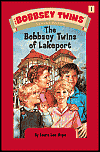
In anticipation of an eighth grade mystery unit this fall, I picked up The Christopher Killer by Alane Ferguson. Let me say up front that while I loved the Bobbsey Twins series as a girl, this is by no means your mother's childhood mystery.

When Cameryn convinces her father, who is the coroner of a small mountain town in Colorado, to hire her as his assistant, little does she suspect that her interest in forensic pathology will bring her face-to-face with the murder of a friend. Ferguson does an excellent job of describing the details of death in the eyes of an investigator, making this piece as morbidly fascinating as a rubber-necker might find a serious car wreck. Simply put, The Christopher Killer is both difficult to read and difficult to put down giving this reader some genuine food-for-thought about what happens between dying and interment. That Ferguson adds to the novel with Cameryn's struggle to come to terms with having been abandoned by her mother, as well as the mounting sexual tension between Cameryn and the sheriff's deputy make this novel a page turner for busy, curious minds.

No doubt, this YA novel will intrigue kids who are too wisened by the media to accept traditional kids' mysteries as "good reads".

Today's Online Reading 06/30/2008

Saturday, June 28, 2008

Today's Online Reading 06/29/2008

Wednesday, June 25, 2008

Diigo Blogging Tool

I really like the concept of a reading blog, but posting has been a bit of a problem. Today I am installing a new blogging tool via Diigo. It will automatically blog the sites I bookmark for me. We'll see how it goes.

Maybe I'll have time to post the hard texts too.

Wednesday, February 07, 2007

East of Eden

It's been twenty years since I first read John Steinbeck's East of Eden, and being older naturally gives me a different perspective. Knowing that oodles has been written about this American masterpiece, I am only going to comment on the two things that stand out most in my middle-aged mind. First, Steinbeck is a dead white guy who didn't seem to think much of women. Second, I do not buy in to the simplistic notion that people are inherently good or evil.

Don't get me wrong. I still enjoyed this work immensely; however, I don't anticipate reading another dead white guy classic again for awhile. What I need is a good read by a woman of another culture.

Wednesday, December 27, 2006

The Princess Test

Fairy tales remind me of those commercials for prescription medications. With the promise of a more fulfilling life, they ought to come with a warning of potentially serious side effects. With that in mind, The Princess Test, Gail Carson Levine's humorous and engaging take on the old fairy tale The Princess and the Pea, has left me torn between delight and disappointment.

The delight: Levine writes with a clever voice that engages the reader with tender affection for the characters. Levine's craft is delightful.

The disappointment: Perhaps my feminist views take this tale too seriously; however, it's the fairy tale genre and its assumptions about the roles of men and women that bother me. Although Prince Nicholas knows next to nothing about the beautiful, simple, and essentially helpless Lorelei, he is convinced that she is the woman of his dreams. Lorelei is a naïve little girl in a young woman's body, and because it is a fairy tale, the reader to lured into wanting to see her and the prince live happily ever after before she ever learns how to be an adult. So, why has this genre endured after hundreds of years? Perhaps human nature simply wants to believe that life, love and happiness are black and white.

Now that I've registered my cynical complaint, I must add that I grew up loving fairy tales and the romantic delusional expectations they set; and somehow I survived thanks to my pragmatic parents. Would I read more of Levine's works? Absolutely. I would recommend this book to our daughters and nieces, but not without a healthy dose of modeling and talk about the true reality of love and relationships.

Sunday, December 10, 2006

Writing Magic

I'm not sure why exactly, but I picked up a copy of Gail Carson Levine's Writing Magic: Creating Stories that Fly at the school book fair in October. I've never read Ella Enchanted or any of Levine's other popular modern takes on traditional fairy tales. Maybe it was that the English teacher in me wanted to take in the advice of a professional writer. Perhaps I was lured with my own fantasy of one day writing a book. Whatever reason, this how-to-write text has charmed me.

Though the audience for Writing Magic is kids who read and enjoy Levine's work, this book can be equally useful for adults who want to have fun imagining and writing. Each chapter concisely addresses a different topic valuable to the writer's craft and gives the reader a variety of suggestions to start writing immediately. That Levine discusses her own process in crafting her published works has also inspired me to become better acquainted with the magic that has made her a beloved author among children of all ages.

Saturday, November 25, 2006

New Moon

I have a confession to make, and I am not sure whether it is laughable or pitiful. I have never read Romeo and Juliet. Sure, I feel the need to excuse myself from this referential faux pas by assuring the reader that indeed I have read roughly a dozen other requisite works by Shakespeare, but understanding Shakespeare’s timeless tale about love matters when reading Stephanie Meyer’s New Moon, the sequel to Twilight. After all, Meyer’s is explicit about the connection.

That said, I enjoyed this preternatural romance. Why? First, Meyer gives Bella Swan such a strong love-torn voice that I wish she could have both the vampire and the werewolf. And despite my woeful lack of Shakespearean trivia in this case, I am shameless to admit that in the 1990s I did gobble up the tales about the vampire Lestat by Anne Rice. That was enough literary reference to give me something to chew on. Finally, my most important personal motivation to quickly feast on New Moon is the anticipation that a half a dozen love-struck thirteen year-old girls are dying to discuss it with me as soon as we return from the Thanksgiving holiday. There is something gratifying about being among a community of young readers who are so hungry to share.

New Moon is adolescent literature, and not just because the heroine is a teenager. Truthfully, Meyer’s novel lacks some depth, and despite Meyer’s adroit skill of crafting a romantic reader’s purpose for continuing on, resolutions to Bella’s problems are too swiftly and neatly resolved. I also cannot help but to compare Edward to Lestat and lament that Edward’s inner angst about what kind of creature he is is not more thoroughly developed. The reader is not afforded the opportunity to deeply feel the agony that must lie in Edward’s conscience, what with the fact that he obviously must crave Bella on many levels. It doesn’t matter that Edward and his family are the equivalent to vampire vegetarians. It would be more gratifying if the reader could more truly feel from Edward either the void of damnation or the his sense of redemption of the soul.

These shortcomings are, however, easy to overlook, for Meyer’s does a fine job of building reader anticipation to continue on with the sequel. Right now, I long to know if and how . . . and what about . . . Oh, I am tempted to give away too much! That I crave to know more about what happens to the characters is the hallmark of a mighty fine read. I am only sorry that I have to wait until next year when Eclipse is available before I can follow up on the love story of Bella and Edward.

Sunday, November 19, 2006

Myself as a young reader

I enjoyed this meme over at Lotus Reads, and thought I ought to give it a whirl. What a great reflective exercise!

1. How old were you when you learned to read and who taught you?

I don't remember the first time I read. What I do recall is lying across my parent's blue bedspread, one leg crossed over the other, my father and I reading The Real Mother Goose together. Actually, I probably remember this only because my mother has a picture of this moment stuffed away in a drawer somewhere. As for my earliest school days, I remember reading the basals about Dick and Jane. I never struggled. I don't remember learning how to sound out words. Reading came very naturally to me when I was young.

2. Did you own any books as a child? If so, what’s the first one that you remember owning? If not, do you recall any of the first titles that you borrowed from the library?

My parents were bibliophiles, and they made many titles available to me. I think that I owned just about everything written by Dr. Seuss. Put Me in the Zoo and Green Eggs and Ham were my favorites. As I grew older, my mother would buy me titles from The Bobbsey Twins series, as well as many from The Boxcar Children series. I enjoyed reading mysteries, and those titles taught me how to make predictions while I read. Funny thing, however, is that I have no recollection of ever reading anything from the popular Nancy Drew series!

3. What’s the first book that you bought with your own money?

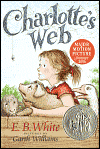
When I was in the fourth grade, I remember pouring over the Scholastic Book Order forms Miss Singleton would pass out at school. Scholastic books were cheap, anywhere from fifty cents to two dollars, so I saved up and bought many. I cannot recall which I purchased first: Charlotte's Web, Sounder or Misty of Chincoteague. I loved stories with animals, and my sister and I would often re-live these stories when we played together.

4. Were you a re-reader as a child? If so, which book did you re-read most often?

I was definitely a re-reader. I remember staying up very late at night crying every time Old Yeller was shot and each time Wilber begged Charlotte not to die. I remember my fascination as I pondered Karana's survival in Island of the Blue Dolphins. If I had to guess which book I re-read most often, I would say it was Where the Red Fern Grows. Knowing where and why the red fern grew fascinated me. I think it must have been my earliest realization that literature could present the reader with symbolism.

5. What’s the first adult book that captured your interest and how old were you when you read it?

Saddly, I have no recollection of ever reading older YA literature aside from -- and please don't laugh -- Archie comic books! Mr. Seeke was my English teacher in the eighth, ninth and tenth grades. He loved Hemmingway and Steinbeck. I remember the hook I felt while reading The Pearl. I think it was the description of the way of life for the poor in Mexico and the bad luck behind the pearl that grabbed me. I could vividly visualize the scorpion making its way toward Coyotito, and I felt a strong sense of injustice as Kino and Juana's lives fell apart.

6. Are there children’s books that you passed by as a child that you have learned to love as an adult? Which ones?

Though I never read her tales as a child, as an adult I fell in love with all of the books in Mrs. Piggle-Wiggle series. I don't know how we acquired our first copy, but my younger son thought long and hard about her "radish cure," which cleverly convinced a dirty boy that it was important to take baths. I am now the parent of young adults, but even after all those years I think about Mr. Piggle Wiggle every time I catch myself with a touch of "interupter-itis"!

Sunday, November 12, 2006

Twilight

It was two average thirteen year-olds, Nicole and Megan who introduced to Twilight by Stephanie Meyer. As I walked through the school cafeteria one day, I passed by their table, the table I like to call The Good Books Group, for the eight or nine girls who sit there seem to always have their latest novels close at hand as they eat lunch, connect and share.

This is the best book ever! Nicole proclaimed. Her eyes glazed over with the same pure revelry of a chocolate sugar high, she recounted how desperately she wanted to be Bella, the narrator of Meyer’s vampire fantasy. For her, Twilight was not just good, it was sweet mind-candy.

I ready the whole thing this weekend! Megan impressed me, for the book I held in my hands was almost 500 hundred pages long.

I finally picked up my own copy yesterday afternoon. Barely a hundred fifty pages into this tasty tome, I can see that Meyer’s debut novel is filled with many appetizing adolescent girl elements.

Seventeen year-old Bella, though neither athletic nor graceful, is beautifully pale, intelligent and observant. As a loving gesture to allow her mother to spend more time on the road with her professional athlete stepfather, Bella elects to move from warm, sunny Phoenix to a chronically dreary town in northern Washington where her quiet and emotionally distant father is the town sheriff. In some ways, Bella is a parent to both of her parents, thus making her a strong character despite her own self-doubts. Bella is also appealing because, despite her akward self-esteem, the boys in her new, tiny school stumble over each other to win her affection. However, there is only one boy, Edward Cullen, who intrigues her. Edward, as it turns out, is a vampire whose conscience waffles between protecting her from his own treacherous nature and his desire to be with her. Bella responds with teenage confusion and worry also as she hungers to understand what it is that makes Edward different, something that the other members in the community are not able to pick up on.

So far, Twilight is filled with mystery and sexual tension. I suspect that the next course will also serve up danger and suspense. Like Nicole and Megan, I will probably gobble it up and hunger for more.

Tuesday, October 31, 2006

Call for contributors

It seems to me that a blog about reading would benefit from multiple contributors. If you are interested in becoming a member, now's your chance.

Sunday, October 29, 2006

Veronika Decides to Die

Even though I've neglected posting, I've been quite busy reading. This is the latest resident on my night stand.

Once again Paulo Coelho explores the potential personal fulfillment that each person has within them. Veronika is a young Slovenia woman who decides to commit suicide. She initially fails, however, and finds herself in an insane asylum where she will stay until the heart-damaging effects of her overdose do her in. As she waits for death, she becomes more reflective about herself.

At one point, she asks the doctor in charge of her case to let her leave the asylum to live out her final day. She says
"I want to leave here so that I can die outside. I need to visit Ljubjana castle. It's always been there, and I've never even had the curiosity to go and see it at close range. I need to talk to the woman who sells chestnuts in winter and flowers in the spring. We passed each other so often, and I never once asked her how she was. And I want to go out without a jacket and walk in the snow. I want to find out what extreme cold feels like, I, who always so well wrapped up, so afraid of catching a cold.

"In short, Dr. Igor, I want to feel the rain on my face, to smile at any man I feel attracted to, to accept all the coffees men might buy more me. I want to kiss my mother, tell her I love her, weep in her lap, unashamed of showing my feelings, because they were always there even though I hid them." (p. 139)

Why is it that we are afraid to simply reveal who we really are until we are faced with the prospect of dying?

Wednesday, September 06, 2006

Early excerpts

Here are some excerpts from the introduction of the latest book I've picked up. The link at the end of this post will reveal the title. See if you can figure it out.
"The difference [between survivors and vicitms] is simple but profound. Vicitims focus on what they cannot change. Survivors focus on what they can change." (p. 13)
"The culminating stage of Second Adulthood I call the Age of Integrity. It is primarily a stage of spiritual growth. Instead of trying to maximize our control over our environment -- a goal that was perfectly appropriate to the earlier Age of Mastery -- now we must cultivate greater appreciation and acceptance of that which we cannot control.
Some of the losses of this stage are inconsoloable losses. To accept them without bitterness usually requires making a greater effort to discern the universal intelligence or spiritual force that is operating behind the changes we now notice almost daily. Rather than focus on time running out, it should be a daily exercise in the third age to make the moment count. Each moment is like a snowflake -- unique, unspoiled, unrepeatable -- and can be appreciated in its surprisingness." (p. 15)
Any idea about the topic? Think about it, then go here to find out more.

Monday, September 04, 2006

The Accidental Buddhist: Part 2

Ironically, Moore's quest become Buddhist is not accidental as the title would imply. Still, there are many noteworthy concepts and references worth considering for outsiders such as myself.

Foremost to me is the notion of monkey mind, or the inability to quiet the voices in one's head, which is quite normal. My knee-jerk reaction is Thank goodness! I was beginning to wonder if my wandering mind was a symptom of insanity. But Buddhists believe that the key to happiness is to be mindful of the present and the world around us as it is. To neglect that, the here and now, is wasteful.

What I don't quite understand, however, is how does one plan for a future in which the present is filled with elements that ease our contentment? To traipse through life without a purpose or future goals must certainly be unmindful and perhaps disrespectful of our present state. Perhaps I am considering the materialistic, worldly things, even if it doesn't seem like I am. Afterall, I have kids, and I would like to prepare them well for adulthood. I will grow old, and I'd rather not forget to save for retirement. It just seems that being mindful of the future is pretty darn important as well, and I wonder how Buddhists address this.

On the flip side of this question is how does one meaningfully reflect on the past in order to make the present life happier as well? Certainly it is foolish to neglect our mistakes and repeat them. Here is an example near and dear to my heart. If a child dies because he is not wearing a bicycle helmet, wouldn't it seem mindful to reflect on that and encourage all children to wear bicycle helmets? Being in the present moment means to be reflective and appreciative of the now and present; but the way I see it, it is also to be reflective of the past and future, for these elements help shape our present.

In retrospect, (is retrospection mindful?) I reckon that present mindfulness is one of those Buddhist koans in and of itself.

Of course present mindfulness makes more sense when you consider the notion of nonduality or the interconnectedness of everyone and everything. Moore writes
"When you perceive a flower, a cat, your bother-in-law Ed, that being you perceive exists at that moment in your mind. Buddhists believe that what exists in your mind is reality, that it is not just a reflection of reality, so if reality exists in your mind, then everything that is part of reality is part of you." (p. 126)
Um. . . Okay, I still have to reflect on this one a bit, and I cannot quite decide if that makes me mindful or not. I am not trying to be disrespectful or difficult, this is just plain hard for my feeble mind to grasp at this moment. Perhaps by being more mindful I can grow to understand this better.

Finally, Moore does mention one book, The Tibetan Book of Living and Dying by Sogyal Rinpoche (p.172) that I would to take a look at one of these days.

The bottom line about The Accidental Buddhist is that I enjoyed it and recommend it, even if I am slightly more confused today than I was before reading it. That work, family and life seemed to interfere with my finishing this book very quickly suggests that perhaps I have been taking in some of Moore's advice. In Buddhist terms, that might be a good thing.

Sunday, August 13, 2006

The Accidental Buddhist

I stumbled on Moore's book during a delicious quest through Barnes & Nobel one Friday evening last May. But The Accidental Buddhist by Dinty W. Moore sat on my night stand for most of the summer waiting patiently for it's time to come. Why did I pick this one up? There are a few reasons, one of them being that there seem to be quite a few Buddhist bloggers out there. But there are other reasons as well.

Over the last several years, I have found myself in the midst of more than one American Buddhist, the most notable one being the hockey mom whose husband, the cruise line piano tuner (and I tell you his profession only because I think it is a rather unusual and cool one), claimed she could meditate for hours. That notion fascinated me and also explained why we rarely saw her at the ice rink.

There is also my wonderful travel experience several years ago, when I had the pleasure of spending a few days in Narita, Japan where one can find the beautiful Naritasan Shinshoji Temple. This temple, which was founded in 914, is simply a magical complex where people bring prayers and incense to the gardens. It is a place that I would absolutely re-visit given the chance. (On a Google search, I was able to find one blog with lovely pictures that help illustrate what I mean.)

Finally, one of the regular field trips from my school is to a Buddhist temple in the city. One of these years I would like to con my way into going with that group, for I am really too shy to make my own visit there.

Though only still in the first third of Moore's narrative, I am drawn to his regular-guy voice, and I can tell that this book will give me a decent overview of what Buddhism is all about. Chapter 5, playfully titled "Why do Tibetans have such trouble with their vacuum cleaners? They have no attachments", explains that there are three main categories of American Buddhism: Zen, Theravada and Tibetan.

Here is a quote:
". . . Geshe-la is explaining that the source of our problems is our human weekness, and that weakness is our tendency to become attached. Attached to all manner of things.

Geshe-la explains it this way:

Though we often tend to blame them, it is not the external things like families, jobs or money that create problems for us in our lives. Rather, what actually makes us unhappy is our tendency to desire that these things bring us happiness. This expectation that family, job, money, a new car, whatever, will make us happy is what binds us and causes our discontent."
(p. 42)

That sounds to me very much like the notion that attitude is everything when it comes to finding happiness. I guess Buddhism must be as much a state-of-mind as anything else.

Friday, August 11, 2006

Great Green Book of Garden Secrets

Once upon a time, I was an avid gardener with a lush and verdent eden in my backyard. This coupled with the fact that I came from a long line of farmers/gardeners inspired my grandmother to send me this book several years ago. The gardening wisdom of Master Gardener Jerry Baker comes across like those schmaltzy As Seen on TV products, but my grandmother and her husband swore by his tips and remedies, which was always good enough for me.

These days my family lives on a larger property with too much clay soil, not enough shade, and dogs. Additionally, our region is still trying to recover from drought, and I no longer have the long, lazy days of being an at-home mom that are perfect for quality gardening time. Keeping up has proven especially daunting the past few summers. So . . . the bottom line is that our yard looks like crap, and I try not to think about what the neighbors must say behind our backs.

Yesterday turned out to be a great day for yard work, perhaps the best one all summer. I pulled weeds. The man mowed. I amended the soil in the evening, and then used one of Jerry Baker's tonics to top it off. Mixing any one of Baker's tonics is kitchen chemistry that always seems to inspire curious comments from my kids and their friends. These concotions use ingredients like sweet cola, beer, ammonia, molasses, instant tea, dish soap, whisky, and tobacco juice. As odd as any of his mixtures seem, they usually produce positive results, though I haven't figured out whether the results are real or placebo effect.

Here is the tonic I used yesterday:

All-Season Clean-Up Tonic

1 cup of Palmolive dish soap,
1 cup of Listerine, and
1 cup of chewing tobacco tea*
Mix all of the ingredients in a bucket, and pour into your 20 gallon hose-end sprayer. Apply to everything in your yard to the point or run-off every 3 weeks, in the morning, throughout the growing season.

Mix all of the ingredients in your 20 gallon hose-end sprayer, filling the balance of the sprayer jar with warm water. Apply to your entire yard to the point of run-off every 2 weeks, in the evening, to discourage insects and prevent disease.

*Chewing Tobacco Tea

* To make tobacco tea, place half a handful of chewing tobacco in an old nylon stocking and soak it in a gallon of hot water until the mixture is dark brown.
(Yes, I puchased chewing tobacco for the first time in my life yesterday too!)

Wednesday, August 09, 2006

Guts

What does a dead man look like? How do planes crash? What are some things that really hurt? What's the best way to make a bow and arrow that you can really hunt with? How hungry do you have to be to suck on a fish head or snapping turtle eggs?

Gary Paulsen, the author of Hatchet, The River and other survival novels shares the true stories and learned wisdom that inspired him to write. While Paulsen's books are considered young adult literature, his works can be fascinating for grown-ups as well. I find Guts and excellent quick read that sparks the imagination.

Connections: Owning Your Own Shadow

It has been several days since my man has informed me about the impending divorce of a couple we have known for the last twenty years. She has worked with my man for that long. They are buddies. I guess the path to divorce started with a keypad program she installed on their computer so she could monitor their teenagers' chatroom activities. Little did she know that it would also reveal his activities, despite the fact that he was in the know about the spying. There is much more to the story, but what I have to say and how this affects me has everything to do with the concept of projection, which is discussed in Owning Your Own Shadow.

You see, whenever this sort of break-up happens to other couples, my man feels a strong affiliation with the jaded spouse and makes assumptions that I might be moving along the path of the wrong-doer. I really hate being forced into that role. This kind of projection has happened several times before, and of course, it happened again earlier this week. Trust me when I say that it is a tough job figuring out how to defend yourself against such projections, because for some reason, it makes matters worse. It is difficult when you love someone and they make negative assumptions about you regularly.

But what is especially difficult this time around is that I have really been fighting a depression all summer long, a depression that he is impervious to. He is so happy-go-lucky. His life is so perfect for him, that he doesn't seem to care about my thoughts or whatever turmoil roils within me. Either that or he is blind to the inner me.

As I read this book, there is much talk about shadows. A shadow is the part of us that we hide from others, from others, from the community. Why do we keep secret thoughts and secret lives? According to Johnson, it is simply for survival. To reveal the side of ourselves that is incongruent with the way the community (or the family in my case) thinks or believes can cause too much instability that it threatens us. There is nothing wrong with the shadow. We all have one. However, when the shadow grows too large, it steeps into our more outward lives.

The bottom line is that at some point, we cannot contain our shadows.

Johnson also talks about how there is gold in the shadow, and that we can use it to improve ourselves. I am still working on how to apply that to my own life.

Last night, I had a disturbing dream. I am not sure how much of it I am willing to divulge here. Johnson contends that we need to pay attention to such dreams. At this moment, I am not so sure how.

Tuesday, August 08, 2006

Bumper stickers

My mother, a good Texas Democrat, recently sent this to me via email. Presently, there are no bumper stickers on my car. As time marches onward, however, I am beginning to really wish I had some of these, especially given how tired I am of the prevailing right-wing sentiment in my community. You could say that I am experiencing my own revolution.

"These bumper stickers were compiled by Jerry Paull, a former Methodist minister in Lakeside, Ohio, who writes: 'The following actual bumper stickers are now on cars. I didn't write any of them. I'm only the messenger. If they make you laugh, good. If they make you cry, good.'"

AT LEAST IN VIETNAM, BUSH HAD AN EXIT STRATEGY

BLIND FAITH IN BAD LEADERSHIP IS NOT PATRIOTISM

IF YOU'RE NOT OUTRAGED, YOU'RE NOT PAYING ATTENTION

IF YOU SUPPORTED BUSH, A YELLOW RIBBON WON'T MAKE UP FOR IT

POVERTY, HEALTHCARE & HOMELESSNESS ARE MORAL ISSUES

BUSH LIED, AND YOU KNOW IT

RELIGIOUS FUNDAMENTALISM: A THREAT ABROAD, A THREAT AT HOME

GOD BLESS EVERYONE (No exceptions)

BUSH SPENT YOUR SOCIAL SECURITY ON HIS WAR

PRO AMERICA, ANTI BUSH

WHO WOULD JESUS BOMB?

FEEL SAFER NOW?

I'D RATHER HAVE A PRESIDENT WHO SCREWED HIS INTERN THAN ONE WHO SCREWED HIS COUNTRY

JESUS WAS A SOCIAL ACTIVIST - THAT IS A LIBERAL

MY VALUES? FREE SPEECH. EQUALITY. LIBERTY. EDUCATION. TOLERANCE

IS IT 2008 YET?

DISSENT IS THE HIGHEST FORM OF PATRIOTISM
--- Thomas Jefferson

DON'T BLAME ME. I VOTED AGAINST BUSH -- TWICE!

ANNOY A CONSERVATIVE; THINK FOR YOURSELF

VISUALIZE IMPEACHMENT

STOP MAD COWBOY DISEASE

GEORGE W. BUSH: MAKING TERRORISTS FASTER THAN HE CAN KILL THEM

DEMOCRATS ARE SEXY. WHOEVER HEARD OF A GOOD PIECE OF ELEPHANT?

ASPIRING CANADIAN

DON'T CONFUSE DYING FOR OIL WITH FIGHTING FOR FREEDOM

HATE, GREED, IGNORANCE: WEAPONS OF MASS DESTRUCTION

HONOR OUR TROOPS; DEMAND THE TRUTH

REBUILD IRAQ? WHY NOT SPEND 87 BILLION ON AMERICA?

FACT: BUSH OIL
1999 - $19 BARREL
2006 - $70 BARREL

THE LAST TIME RELIGION CONTROLLED POLITICS, PEOPLE GOT BURNED AT THE STAKE

CTI Student Manual

It dawned on me late last week during my Taekwondo classs that it was time to purchase the Student Manual. I'd been working on my latest poomse, taegeuk il chang, and my instructor, Mr. A mentioned something about the three lines pattern of movement. It thus was obvious that I was neglecting my studies.

Last night, I purchased the manual before class, and before going to bed, I spent some time reading it. I mostly read about the history of martial arts -- that they originated in China, Korea and Japan -- and that Taekwondo can be traced through three dynasties to as early as 37 BC. Though practiced for thousands of years, the name Taekwondo was not defined for this version of martial arts until 1955. Here are some other new things that give TKD a little more meaning to me:

  • Taekwondo is "the Korean art of smashing with the bare feet and hands."

    Thought: Smashing things was not my motivation for signing up for TKD. What attracted me to the artform was the beautiful movements of the poomse. Still, I am beginning to think that breaking a board is not impossible for me. What I continue to enjoy about TKD is the rigorous workout coupled with the disciplinary expectation and mental concentration.
  • Moo Sul Kwan means "martial arts school"

    Thought: My son and his friends have mentioned a desire to learn Moo Sul Kwan style Taekwondo. The next time they bring it up, I will share this piece of translation.
  • Taegeuk il chang has 16 counts and should last 16 seconds. It stands for "the force that is in living things. Originating, correct, advantageous, and firm."

    Thought: What I like about practicing poomse is the feeling of focus and centeredness. I like that there is symbolism to the form. I had not been practicing it with a clearly defined idea. I will have to keep these words in mind from now on.
  •