Welcome to Teacher's Clubhouse!
Elementary teacher online activities resource.
Thursday, July 10, 2008
Today's Online Reading 07/11/2008


Wednesday, July 09, 2008
Tuesday, July 08, 2008
Today's Online Reading 07/09/2008
Use this tool to "cheat" Plurk and Twitter when what you have to say requires more characters than the limit.
Webquest model and tool.
Sunday, July 06, 2008
Saturday, July 05, 2008
Today's Online Reading 07/06/2008
Create and share online books with pages that turn. Embeddable widgets are available.
Free webquest hosting site. User has the option to browse already created webquests in all content areas.
Tuesday, July 01, 2008
Today's Online Reading 07/02/2008
Well - A Guided Tour of Your Body - Interactive Feature - NYTimes.com
This is an interesting site about the human body.
Sunday, June 29, 2008
The Christopher Killer
 In anticipation of an eighth grade mystery unit this fall, I picked up The Christopher Killer by Alane Ferguson. Let me say up front that while I loved the Bobbsey Twins series as a girl, this is by no means your mother's childhood mystery.
When Cameryn convinces her father, who is the coroner of a small mountain town in Colorado, to hire her as his assistant, little does she suspect that her interest in forensic pathology will bring her face-to-face with the murder of a friend. Ferguson does an excellent job of describing the details of death in the eyes of an investigator, making this piece as morbidly fascinating as a rubber-necker might find a serious car wreck. Simply put, The Christopher Killer is both difficult to read and difficult to put down giving this reader some genuine food-for-thought about what happens between dying and interment. That Ferguson adds to the novel with Cameryn's struggle to come to terms with having been abandoned by her mother, as well as the mounting sexual tension between Cameryn and the sheriff's deputy make this novel a page turner for busy, curious minds.
No doubt, this YA novel will intrigue kids who are too wisened by the media to accept traditional kids' mysteries as "good reads".
Today's Online Reading 06/30/2008
Tag Galaxy is a fun way to narrow down a search for photos listed under Creative Commons.
Learn about the history of and take a virtual tour of the White House.
Saturday, June 28, 2008
Today's Online Reading 06/29/2008
Acropolis of Athens - 360 Virtual Tour
Take an interactive virtual tour of the Acropolis. The site claims to be also working on a Google Earth tour.
Take a quick quiz to assess your understanding about differentiation.
Wednesday, June 25, 2008
Diigo Blogging Tool
I really like the concept of a reading blog, but posting has been a bit of a problem. Today I am installing a new blogging tool via Diigo. It will automatically blog the sites I bookmark for me. We'll see how it goes.
Maybe I'll have time to post the hard texts too.
Maybe I'll have time to post the hard texts too.
Wednesday, February 07, 2007
East of Eden
 It's been twenty years since I first read John Steinbeck's East of Eden, and being older naturally gives me a different perspective. Knowing that oodles has been written about this American masterpiece, I am only going to comment on the two things that stand out most in my middle-aged mind. First, Steinbeck is a dead white guy who didn't seem to think much of women. Second, I do not buy in to the simplistic notion that people are inherently good or evil.
Don't get me wrong. I still enjoyed this work immensely; however, I don't anticipate reading another dead white guy classic again for awhile. What I need is a good read by a woman of another culture.
Wednesday, December 27, 2006
The Princess Test
 Fairy tales remind me of those commercials for prescription medications. With the promise of a more fulfilling life, they ought to come with a warning of potentially serious side effects. With that in mind, The Princess Test, Gail Carson Levine's humorous and engaging take on the old fairy tale The Princess and the Pea, has left me torn between delight and disappointment.
The delight: Levine writes with a clever voice that engages the reader with tender affection for the characters. Levine's craft is delightful.
The disappointment: Perhaps my feminist views take this tale too seriously; however, it's the fairy tale genre and its assumptions about the roles of men and women that bother me. Although Prince Nicholas knows next to nothing about the beautiful, simple, and essentially helpless Lorelei, he is convinced that she is the woman of his dreams. Lorelei is a naïve little girl in a young woman's body, and because it is a fairy tale, the reader to lured into wanting to see her and the prince live happily ever after before she ever learns how to be an adult. So, why has this genre endured after hundreds of years? Perhaps human nature simply wants to believe that life, love and happiness are black and white.
Now that I've registered my cynical complaint, I must add that I grew up loving fairy tales and the romantic delusional expectations they set; and somehow I survived thanks to my pragmatic parents. Would I read more of Levine's works? Absolutely. I would recommend this book to our daughters and nieces, but not without a healthy dose of modeling and talk about the true reality of love and relationships.
Sunday, December 10, 2006
Writing Magic
 I'm not sure why exactly, but I picked up a copy of Gail Carson Levine's Writing Magic: Creating Stories that Fly at the school book fair in October. I've never read Ella Enchanted or any of Levine's other popular modern takes on traditional fairy tales. Maybe it was that the English teacher in me wanted to take in the advice of a professional writer. Perhaps I was lured with my own fantasy of one day writing a book. Whatever reason, this how-to-write text has charmed me.
Though the audience for Writing Magic is kids who read and enjoy Levine's work, this book can be equally useful for adults who want to have fun imagining and writing. Each chapter concisely addresses a different topic valuable to the writer's craft and gives the reader a variety of suggestions to start writing immediately. That Levine discusses her own process in crafting her published works has also inspired me to become better acquainted with the magic that has made her a beloved author among children of all ages.
Saturday, November 25, 2006
New Moon
 I have a confession to make, and I am not sure whether it is laughable or pitiful. I have never read Romeo and Juliet. Sure, I feel the need to excuse myself from this referential faux pas by assuring the reader that indeed I have read roughly a dozen other requisite works by Shakespeare, but understanding Shakespeare’s timeless tale about love matters when reading Stephanie Meyer’s New Moon, the sequel to Twilight. After all, Meyer’s is explicit about the connection.
That said, I enjoyed this preternatural romance. Why? First, Meyer gives Bella Swan such a strong love-torn voice that I wish she could have both the vampire and the werewolf. And despite my woeful lack of Shakespearean trivia in this case, I am shameless to admit that in the 1990s I did gobble up the tales about the vampire Lestat by Anne Rice. That was enough literary reference to give me something to chew on. Finally, my most important personal motivation to quickly feast on New Moon is the anticipation that a half a dozen love-struck thirteen year-old girls are dying to discuss it with me as soon as we return from the Thanksgiving holiday. There is something gratifying about being among a community of young readers who are so hungry to share.
New Moon is adolescent literature, and not just because the heroine is a teenager. Truthfully, Meyer’s novel lacks some depth, and despite Meyer’s adroit skill of crafting a romantic reader’s purpose for continuing on, resolutions to Bella’s problems are too swiftly and neatly resolved. I also cannot help but to compare Edward to Lestat and lament that Edward’s inner angst about what kind of creature he is is not more thoroughly developed. The reader is not afforded the opportunity to deeply feel the agony that must lie in Edward’s conscience, what with the fact that he obviously must crave Bella on many levels. It doesn’t matter that Edward and his family are the equivalent to vampire vegetarians. It would be more gratifying if the reader could more truly feel from Edward either the void of damnation or the his sense of redemption of the soul.
These shortcomings are, however, easy to overlook, for Meyer’s does a fine job of building reader anticipation to continue on with the sequel. Right now, I long to know if and how . . . and what about . . . Oh, I am tempted to give away too much! That I crave to know more about what happens to the characters is the hallmark of a mighty fine read. I am only sorry that I have to wait until next year when Eclipse is available before I can follow up on the love story of Bella and Edward.
Sunday, November 19, 2006
Myself as a young reader
I enjoyed this meme over at Lotus Reads, and thought I ought to give it a whirl. What a great reflective exercise!
1. How old were you when you learned to read and who taught you?
 I don't remember the first time I read. What I do recall is lying across my parent's blue bedspread, one leg crossed over the other, my father and I reading The Real Mother Goose together. Actually, I probably remember this only because my mother has a picture of this moment stuffed away in a drawer somewhere. As for my earliest school days, I remember reading the basals about Dick and Jane. I never struggled. I don't remember learning how to sound out words. Reading came very naturally to me when I was young.
2. Did you own any books as a child? If so, what’s the first one that you remember owning? If not, do you recall any of the first titles that you borrowed from the library?
 My parents were bibliophiles, and they made many titles available to me. I think that I owned just about everything written by Dr. Seuss. Put Me in the Zoo and Green Eggs and Ham were my favorites. As I grew older, my mother would buy me titles from The Bobbsey Twins series, as well as many from The Boxcar Children series. I enjoyed reading mysteries, and those titles taught me how to make predictions while I read. Funny thing, however, is that I have no recollection of ever reading anything from the popular Nancy Drew series!
3. What’s the first book that you bought with your own money?
 When I was in the fourth grade, I remember pouring over the Scholastic Book Order forms Miss Singleton would pass out at school. Scholastic books were cheap, anywhere from fifty cents to two dollars, so I saved up and bought many. I cannot recall which I purchased first: Charlotte's Web, Sounder or Misty of Chincoteague. I loved stories with animals, and my sister and I would often re-live these stories when we played together.
4. Were you a re-reader as a child? If so, which book did you re-read most often?
 I was definitely a re-reader. I remember staying up very late at night crying every time Old Yeller was shot and each time Wilber begged Charlotte not to die. I remember my fascination as I pondered Karana's survival in Island of the Blue Dolphins. If I had to guess which book I re-read most often, I would say it was Where the Red Fern Grows. Knowing where and why the red fern grew fascinated me. I think it must have been my earliest realization that literature could present the reader with symbolism.
5. What’s the first adult book that captured your interest and how old were you when you read it?
 Saddly, I have no recollection of ever reading older YA literature aside from -- and please don't laugh -- Archie comic books! Mr. Seeke was my English teacher in the eighth, ninth and tenth grades. He loved Hemmingway and Steinbeck. I remember the hook I felt while reading The Pearl. I think it was the description of the way of life for the poor in Mexico and the bad luck behind the pearl that grabbed me. I could vividly visualize the scorpion making its way toward Coyotito, and I felt a strong sense of injustice as Kino and Juana's lives fell apart.
6. Are there children’s books that you passed by as a child that you have learned to love as an adult? Which ones?
 Though I never read her tales as a child, as an adult I fell in love with all of the books in Mrs. Piggle-Wiggle series. I don't know how we acquired our first copy, but my younger son thought long and hard about her "radish cure," which cleverly convinced a dirty boy that it was important to take baths. I am now the parent of young adults, but even after all those years I think about Mr. Piggle Wiggle every time I catch myself with a touch of "interupter-itis"!
1. How old were you when you learned to read and who taught you?
 I don't remember the first time I read. What I do recall is lying across my parent's blue bedspread, one leg crossed over the other, my father and I reading The Real Mother Goose together. Actually, I probably remember this only because my mother has a picture of this moment stuffed away in a drawer somewhere. As for my earliest school days, I remember reading the basals about Dick and Jane. I never struggled. I don't remember learning how to sound out words. Reading came very naturally to me when I was young.
2. Did you own any books as a child? If so, what’s the first one that you remember owning? If not, do you recall any of the first titles that you borrowed from the library?
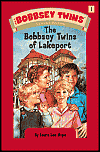 My parents were bibliophiles, and they made many titles available to me. I think that I owned just about everything written by Dr. Seuss. Put Me in the Zoo and Green Eggs and Ham were my favorites. As I grew older, my mother would buy me titles from The Bobbsey Twins series, as well as many from The Boxcar Children series. I enjoyed reading mysteries, and those titles taught me how to make predictions while I read. Funny thing, however, is that I have no recollection of ever reading anything from the popular Nancy Drew series!
3. What’s the first book that you bought with your own money?
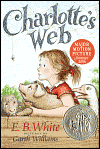 When I was in the fourth grade, I remember pouring over the Scholastic Book Order forms Miss Singleton would pass out at school. Scholastic books were cheap, anywhere from fifty cents to two dollars, so I saved up and bought many. I cannot recall which I purchased first: Charlotte's Web, Sounder or Misty of Chincoteague. I loved stories with animals, and my sister and I would often re-live these stories when we played together.
4. Were you a re-reader as a child? If so, which book did you re-read most often?
 I was definitely a re-reader. I remember staying up very late at night crying every time Old Yeller was shot and each time Wilber begged Charlotte not to die. I remember my fascination as I pondered Karana's survival in Island of the Blue Dolphins. If I had to guess which book I re-read most often, I would say it was Where the Red Fern Grows. Knowing where and why the red fern grew fascinated me. I think it must have been my earliest realization that literature could present the reader with symbolism.
5. What’s the first adult book that captured your interest and how old were you when you read it?
 Saddly, I have no recollection of ever reading older YA literature aside from -- and please don't laugh -- Archie comic books! Mr. Seeke was my English teacher in the eighth, ninth and tenth grades. He loved Hemmingway and Steinbeck. I remember the hook I felt while reading The Pearl. I think it was the description of the way of life for the poor in Mexico and the bad luck behind the pearl that grabbed me. I could vividly visualize the scorpion making its way toward Coyotito, and I felt a strong sense of injustice as Kino and Juana's lives fell apart.
6. Are there children’s books that you passed by as a child that you have learned to love as an adult? Which ones?
 Though I never read her tales as a child, as an adult I fell in love with all of the books in Mrs. Piggle-Wiggle series. I don't know how we acquired our first copy, but my younger son thought long and hard about her "radish cure," which cleverly convinced a dirty boy that it was important to take baths. I am now the parent of young adults, but even after all those years I think about Mr. Piggle Wiggle every time I catch myself with a touch of "interupter-itis"!
Sunday, November 12, 2006
Twilight
 It was two average thirteen year-olds, Nicole and Megan who introduced to Twilight by Stephanie Meyer. As I walked through the school cafeteria one day, I passed by their table, the table I like to call The Good Books Group, for the eight or nine girls who sit there seem to always have their latest novels close at hand as they eat lunch, connect and share.
This is the best book ever! Nicole proclaimed. Her eyes glazed over with the same pure revelry of a chocolate sugar high, she recounted how desperately she wanted to be Bella, the narrator of Meyer’s vampire fantasy. For her, Twilight was not just good, it was sweet mind-candy.
I ready the whole thing this weekend! Megan impressed me, for the book I held in my hands was almost 500 hundred pages long.
I finally picked up my own copy yesterday afternoon. Barely a hundred fifty pages into this tasty tome, I can see that Meyer’s debut novel is filled with many appetizing adolescent girl elements.
Seventeen year-old Bella, though neither athletic nor graceful, is beautifully pale, intelligent and observant. As a loving gesture to allow her mother to spend more time on the road with her professional athlete stepfather, Bella elects to move from warm, sunny Phoenix to a chronically dreary town in northern Washington where her quiet and emotionally distant father is the town sheriff. In some ways, Bella is a parent to both of her parents, thus making her a strong character despite her own self-doubts. Bella is also appealing because, despite her akward self-esteem, the boys in her new, tiny school stumble over each other to win her affection. However, there is only one boy, Edward Cullen, who intrigues her. Edward, as it turns out, is a vampire whose conscience waffles between protecting her from his own treacherous nature and his desire to be with her. Bella responds with teenage confusion and worry also as she hungers to understand what it is that makes Edward different, something that the other members in the community are not able to pick up on.
So far, Twilight is filled with mystery and sexual tension. I suspect that the next course will also serve up danger and suspense. Like Nicole and Megan, I will probably gobble it up and hunger for more.
Tuesday, October 31, 2006
Call for contributors
It seems to me that a blog about reading would benefit from multiple contributors. If you are interested in becoming a member, now's your chance.
Sunday, October 29, 2006
Veronika Decides to Die
 Even though I've neglected posting, I've been quite busy reading. This is the latest resident on my night stand.
Once again Paulo Coelho explores the potential personal fulfillment that each person has within them. Veronika is a young Slovenia woman who decides to commit suicide. She initially fails, however, and finds herself in an insane asylum where she will stay until the heart-damaging effects of her overdose do her in. As she waits for death, she becomes more reflective about herself.
At one point, she asks the doctor in charge of her case to let her leave the asylum to live out her final day. She says
"I want to leave here so that I can die outside. I need to visit Ljubjana castle. It's always been there, and I've never even had the curiosity to go and see it at close range. I need to talk to the woman who sells chestnuts in winter and flowers in the spring. We passed each other so often, and I never once asked her how she was. And I want to go out without a jacket and walk in the snow. I want to find out what extreme cold feels like, I, who always so well wrapped up, so afraid of catching a cold.
"In short, Dr. Igor, I want to feel the rain on my face, to smile at any man I feel attracted to, to accept all the coffees men might buy more me. I want to kiss my mother, tell her I love her, weep in her lap, unashamed of showing my feelings, because they were always there even though I hid them." (p. 139)
Why is it that we are afraid to simply reveal who we really are until we are faced with the prospect of dying?
Wednesday, September 06, 2006
Early excerpts
Here are some excerpts from the introduction of the latest book I've picked up. The link at the end of this post will reveal the title. See if you can figure it out.
"The difference [between survivors and vicitms] is simple but profound. Vicitims focus on what they cannot change. Survivors focus on what they can change." (p. 13)
"The culminating stage of Second Adulthood I call the Age of Integrity. It is primarily a stage of spiritual growth. Instead of trying to maximize our control over our environment -- a goal that was perfectly appropriate to the earlier Age of Mastery -- now we must cultivate greater appreciation and acceptance of that which we cannot control.Any idea about the topic? Think about it, then go here to find out more.
Some of the losses of this stage are inconsoloable losses. To accept them without bitterness usually requires making a greater effort to discern the universal intelligence or spiritual force that is operating behind the changes we now notice almost daily. Rather than focus on time running out, it should be a daily exercise in the third age to make the moment count. Each moment is like a snowflake -- unique, unspoiled, unrepeatable -- and can be appreciated in its surprisingness." (p. 15)
Monday, September 04, 2006
The Accidental Buddhist: Part 2
 Ironically, Moore's quest become Buddhist is not accidental as the title would imply. Still, there are many noteworthy concepts and references worth considering for outsiders such as myself.
Foremost to me is the notion of monkey mind, or the inability to quiet the voices in one's head, which is quite normal. My knee-jerk reaction is Thank goodness! I was beginning to wonder if my wandering mind was a symptom of insanity. But Buddhists believe that the key to happiness is to be mindful of the present and the world around us as it is. To neglect that, the here and now, is wasteful.
What I don't quite understand, however, is how does one plan for a future in which the present is filled with elements that ease our contentment? To traipse through life without a purpose or future goals must certainly be unmindful and perhaps disrespectful of our present state. Perhaps I am considering the materialistic, worldly things, even if it doesn't seem like I am. Afterall, I have kids, and I would like to prepare them well for adulthood. I will grow old, and I'd rather not forget to save for retirement. It just seems that being mindful of the future is pretty darn important as well, and I wonder how Buddhists address this.
On the flip side of this question is how does one meaningfully reflect on the past in order to make the present life happier as well? Certainly it is foolish to neglect our mistakes and repeat them. Here is an example near and dear to my heart. If a child dies because he is not wearing a bicycle helmet, wouldn't it seem mindful to reflect on that and encourage all children to wear bicycle helmets? Being in the present moment means to be reflective and appreciative of the now and present; but the way I see it, it is also to be reflective of the past and future, for these elements help shape our present.
In retrospect, (is retrospection mindful?) I reckon that present mindfulness is one of those Buddhist koans in and of itself.
Of course present mindfulness makes more sense when you consider the notion of nonduality or the interconnectedness of everyone and everything. Moore writes
"When you perceive a flower, a cat, your bother-in-law Ed, that being you perceive exists at that moment in your mind. Buddhists believe that what exists in your mind is reality, that it is not just a reflection of reality, so if reality exists in your mind, then everything that is part of reality is part of you." (p. 126)Um. . . Okay, I still have to reflect on this one a bit, and I cannot quite decide if that makes me mindful or not. I am not trying to be disrespectful or difficult, this is just plain hard for my feeble mind to grasp at this moment. Perhaps by being more mindful I can grow to understand this better.
Finally, Moore does mention one book, The Tibetan Book of Living and Dying by Sogyal Rinpoche (p.172) that I would to take a look at one of these days.
The bottom line about The Accidental Buddhist is that I enjoyed it and recommend it, even if I am slightly more confused today than I was before reading it. That work, family and life seemed to interfere with my finishing this book very quickly suggests that perhaps I have been taking in some of Moore's advice. In Buddhist terms, that might be a good thing.
